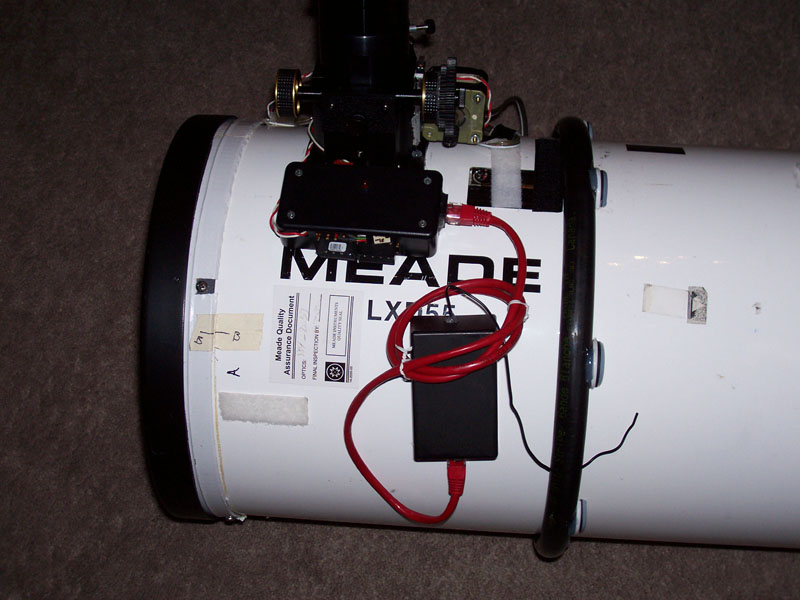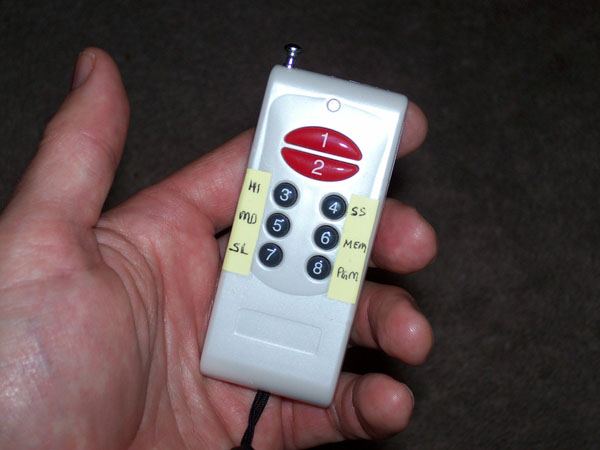
click to enlarge
|
UPDATE - July/08
If you're looking for the older, hardwired version of my PICfocus, click here.
I have upgraded the PICFOCUS project to use with a JMI crayford focuser,
with a new program, and a piggyback project box to house the receiver and decoder for a tiny new
WIRELESS focus controller with a 500m
range. This means I can clip the focuser controller to my belt loop and stop tripping over the
extra wire! New features (much more expandable due to a different PIC):
- 8 presets
- 4 speeds (fast, med, slow, single step)
- programmable speed reference for different gear ratios
- simple friction clutch mechanism for quick disengaging (manual control)
- aux control function for 2 servos or 2 digital (on/off) control outputs
- includes ASTROSNAP autofocus input mode
- implements BACKLASH compensation for the focuser geartrain in single step and focusASSIST mode
- includes focusASSIST - when used with a program like K3CCDtools with FFT star analysis, it performs a user-assisted
incremental search for best focus
|
Much has been learned since I started the original PICfocus project:
- reference points (presets) change after each collimation, making them helpful for single night use only
- UNLESS you're imaging, or have a lot of settling time after touching the focuser, manual focus is faster
- if there is any significant gearing ratio for fine control via a motorized focuser, you need a clutch mechanism
to disengage the motor for manual focusing use (implemented)
- a hardwired focuser controller is yet another trip hazard, another item to fall to the ground, and another
nuisance to connect/disconnect (fixed with wireless mode)
- backlash in the gear train is a potential issue when changing direction and trying to find the best focus
(fixed in software)
In short, most users will want a motorized focuser ONLY if they're doing astrophotography.
The wireless remote and receiver were ordered from Ebay for under $20, see link to vendor.
Note that this is the 8-button remote with momentary output receiver, without relays.
For a full description of the remote control functions, see the detailed comments at the beginning of the PIC program listing.
|